


















Palm oil is one of the most widely traded edible oils in the world, and demand for 5L, 10L, 20L, and 25L jerry cans keeps growing across retail, wholesale, and food service. Filling these containers by hand is slow, messy, and inconsistent. An Automatic Palm Oil Jerry Can Filling Line solves these problems by handling every step, from can feeding to filling, capping, labeling, and carton packing, in one continuous process. This guide explains how the line works, which parts matter most, and how to choose the right configuration for your plant.
Why Palm Oil Needs a Specialized Filling Line
Palm oil is not like sunflower or soybean oil. It solidifies at lower temperatures and is thick when cool, so a standard liquid filler often struggles with it. A purpose-built line deals with these characteristics directly.
Viscosity and Temperature Control
Palm oil starts to thicken below roughly 25-30°C, depending on the grade. Good filling systems use a jacketed or heated buffer tank and heat-traced pipework to keep the oil at a steady, pumpable temperature. This prevents clogging, reduces dripping, and improves filling accuracy.
Foaming and Dripping
Thick oils can trap air, which causes foam and inaccurate volumes. Bottom-up diving nozzles and anti-drip valves fill the can from the bottom and cut the flow cleanly, keeping the neck and the exterior of the jerry can clean.
Hygiene and Food Safety
Because palm oil is a food product, all contact parts should be made from SUS304 or SUS316 stainless steel. Smooth welds, sanitary fittings, and easy-clean design help you meet food safety standards such as HACCP and ISO 22000.
Main Components of an Automatic Palm Oil Jerry Can Filling Line
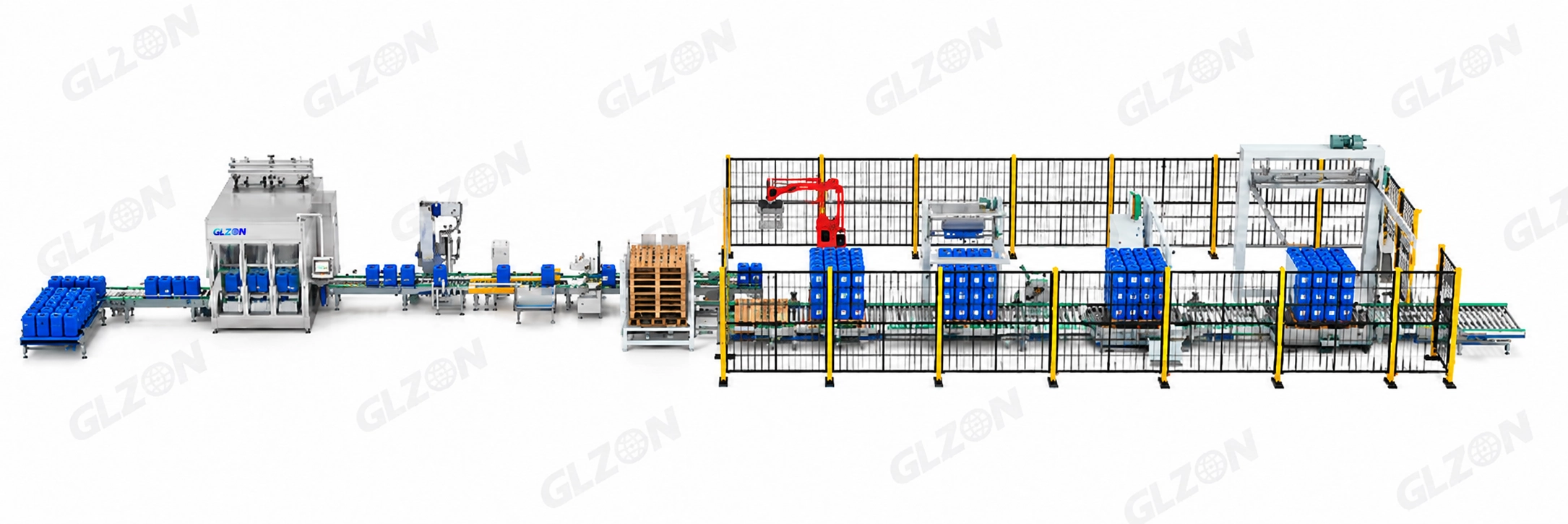
A complete line usually combines several machines linked by conveyors and controlled by one PLC.
1. Can Unscrambler and Feeding System
Empty jerry cans are loaded into a hopper and aligned automatically. A rinsing or air-blowing station can remove dust before filling.
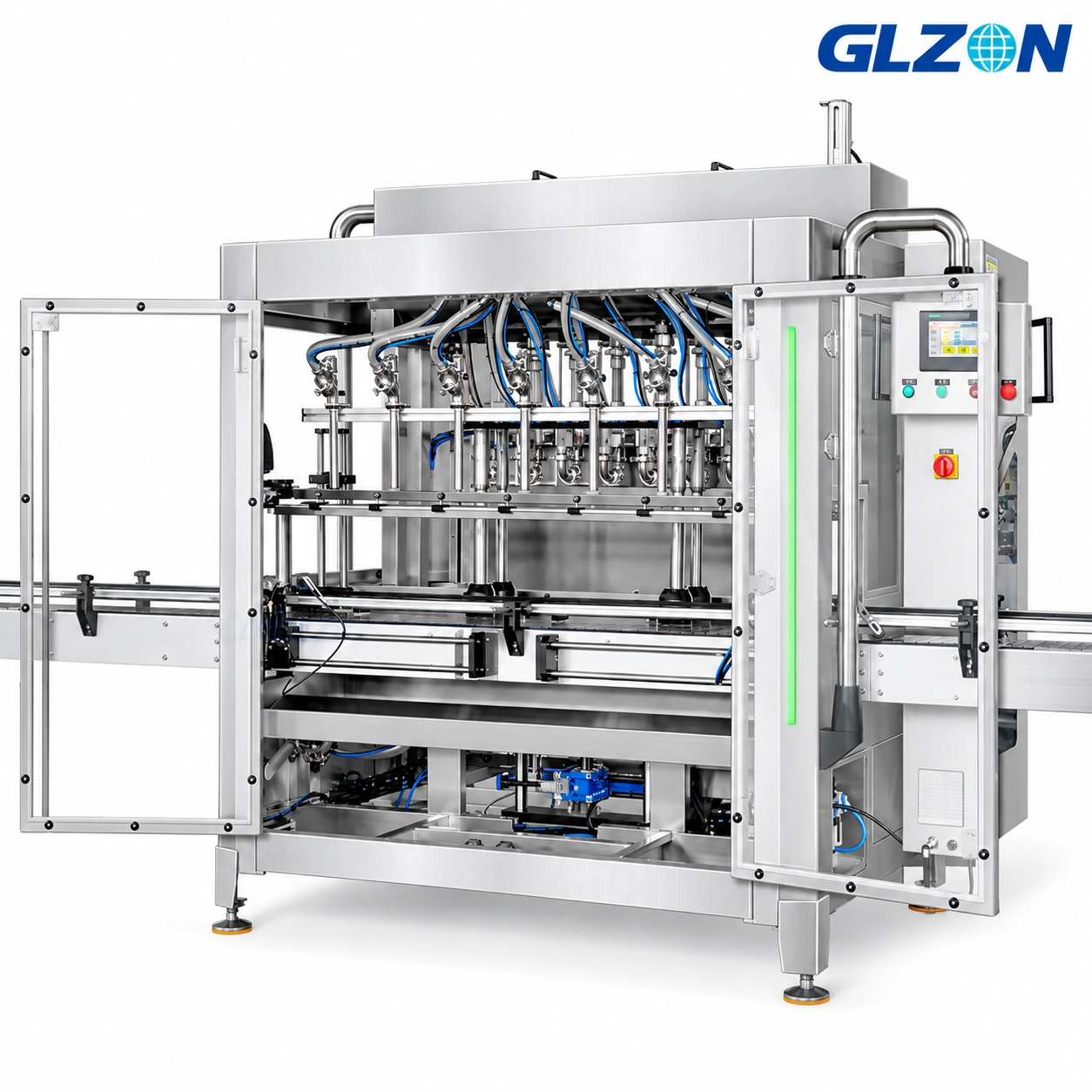
2. Filling Machine
This is the core of the line. Two technologies are common:
- Flow meter (mass or electromagnetic) filling: Fast and accurate, well suited to 5L-10L cans.
- Weighing (load cell) filling: Ideal for 20L-25L cans, where accuracy by weight matters most and viscosity varies with temperature.
Servo-driven pumps and multi-head layouts let you scale output from a few hundred to more than 2,000 cans per hour.
3. Capping Machine
Automatic cap feeders and torque-controlled capping heads seal screw caps tightly and consistently. Some lines add an induction sealing step for tamper-evident protection.
4. Labeling and Coding
Sticker labelers apply front and back labels, while inkjet or laser coders print batch numbers, production dates, and expiry dates.
5. Check Weigher and Leak Detection
An inline check weigher rejects underfilled or overfilled cans automatically, protecting your margins and your compliance record.
6. Carton Packing and Palletizing
At the end of the line, robotic or semi-automatic packers place cans into cartons or onto pallets, ready for shipping.
How the Line Works, Step by Step
The Filling Process
- Palm oil is pumped from the storage tank into a heated buffer tank.
- Empty cans move along the conveyor to the filling station.
- Sensors detect each can, and nozzles dive in to fill from the bottom.
- The filler switches to slow-fill near the target volume for a precise finish.
- Filled cans pass to the capper, labeler, coder, and check weigher.
- Approved cans are packed, and rejects are diverted automatically.
The whole cycle is managed by a touchscreen HMI, so operators can change can sizes and recipes in minutes.
Key Benefits of Automation
Higher Output and Lower Labor Costs
One line can replace many manual workers. A typical system handles 600-2,000 cans per hour while needing only a few operators for supervision.
Accurate Fill Volume
Fill tolerance is often held within ±0.1-0.5%, depending on can size. Less giveaway means real savings when you pack thousands of liters each day.
Cleaner Packaging
Anti-drip nozzles and sealed conveyors keep the work area and the cans free of oil, which improves both product appearance and worker safety.
Flexible 5L to 25L Capability
With quick-change nozzles, guide rails, and parameter presets, one Automatic Palm Oil Jerry Can Filling Line can handle several can sizes with minimal downtime.
Traceability and Quality Control
Integrated coding, weighing, and data logging make it easy to trace every batch, which matters for export markets and large retail customers.
How to Choose the Right Filling Line
Before buying, review these factors with your supplier.
Production Capacity
Calculate your daily output in cans per hour, and add 20-30% headroom for future growth. Underbuying capacity is one of the most common and costly mistakes.
Can Size and Neck Type
Confirm the range of jerry can volumes, neck diameters, and handle styles you plan to run. Square, round and rectangular cans may need different guides and grippers.
Oil Grade and Operating Temperature
RBD palm oil, palm olein, and palm stearin behave differently at the same temperature. Share your oil specifications so the supplier can size the heating system and pumps correctly.
Level of Automation
Choose between a semi-automatic line for lower investment and a fully automatic line for maximum efficiency. If you expect to scale, make sure the layout can be extended with extra heads or robotic palletizing later.
Materials, Standards and After-Sales Support
Check stainless steel grades, electrical brands (such as Siemens, Omron, or Schneider), certifications such as CE, and the availability of spare parts, installation, and operator training.
Maintenance Tips for Long Service Life
- Clean nozzles and pipes regularly to avoid solidified oil build-up.
- Keep the heating system calibrated so oil stays at a stable temperature.
- Inspect seals, gaskets, and pump parts on a fixed schedule.
- Calibrate load cells and flow meters periodically.
- Train operators on startup and shutdown routines, especially in cooler climates.
Applications
An Automatic Palm Oil Jerry Can Filling Line suits edible oil refineries, repackers, cooking oil brands, export-oriented producers, and food service suppliers. The same design can often be adapted for other viscous liquids, such as vegetable oil, lubricants, or sauces, with small changes.
Frequently Asked Questions (FAQ)
What jerry can sizes can the line fill?
Most lines handle 5L, 10L, 20L and 25L cans. Custom setups can cover other sizes, and quick-change parts shorten switchover time.
How fast is an automatic palm oil filling line?
Speeds typically range from 600 to 2,000 cans per hour, depending on the number of filling heads, can size, and oil viscosity.
How accurate is the filling?
With flow meters or load cells, accuracy usually stays within ±0.1-0.5% of the target volume. Weighing systems are best for large cans.
Can the line handle solidified or cold palm oil?
Palm oil should be kept warm enough to flow. Heated tanks and traced pipes are standard on a proper line, and cold oil should be pre-melted before filling.
Is the machine made from food-grade materials?
Yes. All parts that touch the oil are normally SUS304 or SUS316 stainless steel, with food-grade seals and gaskets.
How much space does the line need?
A typical 5L-25L line needs about 15-30 meters in length, depending on how many machines you include (capper, labeler, packer, and so on). Your supplier can provide a layout drawing.
Can I add robotic palletizing later?
Yes. A well-designed line leaves room for later upgrades such as automatic carton packing and robotic palletizers.
Conclusion
If you want faster output, lower waste and more consistent product quality, investing in an Automatic Palm Oil Jerry Can Filling Line is a smart step. By matching the filling technology, heating system, and level of automation to your oil type, can sizes, and production targets, you build a packaging operation that is accurate, hygienic, and ready to grow. Contact a qualified equipment supplier, share your requirements, and request a customized layout and quotation today.