


















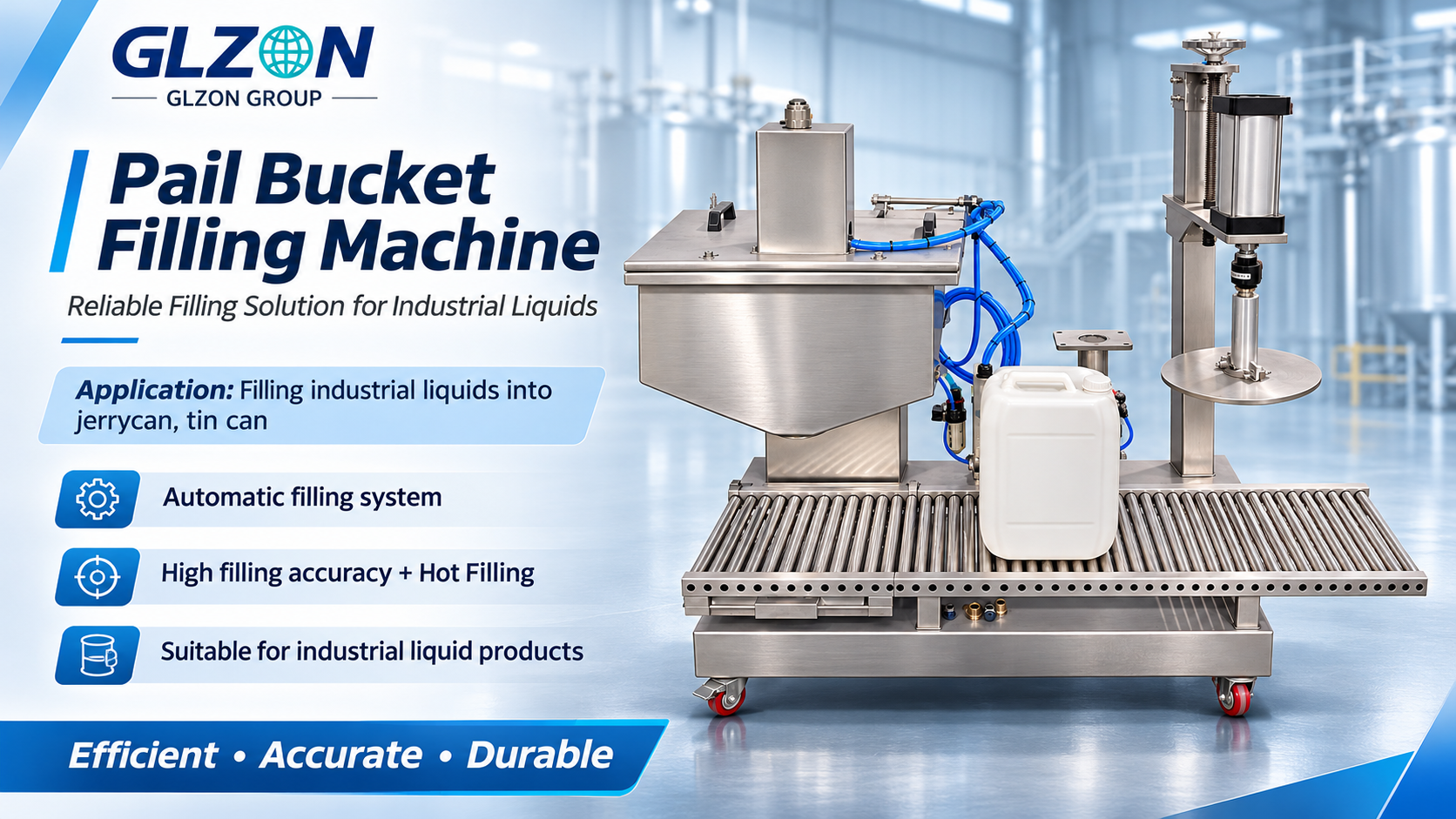
Industrial Pail and Bucket Filling Machine for Paint and Chemical Products
Introduction
A pail filling machine helps manufacturers package paint, coatings, adhesives, and other compatible industrial liquids into buckets and pails. It controls the filling quantity and supports efficient liquid packaging operations.
GLZON provides industrial liquid filling solutions for different container sizes and production requirements. These systems can support semi-automatic and automatic filling operations.
Furthermore, manufacturers can configure the equipment for 5 L, 10 L, 20 L, and 30 L pails, depending on the selected machine model. They can also integrate automatic conveying, capping, and other packaging equipment.
What Is a Pail Filling Machine?
A pail filling machine is industrial equipment designed to fill liquid products into pre-made pails and buckets.
The operator or automatic handling system positions an empty pail under the filling nozzle. Next, the machine dispenses a controlled quantity of liquid into the container.
After filling, the machine releases the pail for the next packaging operation. Depending on the production line, the next station may include lid placement, bucket closing, capping, or conveying.
This equipment supports different compatible products, including paint, coatings, industrial adhesives, detergents, and chemical liquids.
Main Features of Pail Filling Machines
1. Accurate Filling System
The filling system controls the quantity of liquid dispensed into each pail.
Manufacturers can select weight-based or volumetric filling according to their product and packaging requirements. As a result, the machine helps maintain consistent filling operations.
2. Different Pail Sizes
A suitable bucket filling machine can support different container dimensions.
For example, manufacturers may require 5 L, 10 L, 20 L, or 30 L pails. However, the final configuration depends on the container dimensions and selected machine model.
3. Suitable for Paint and Industrial Liquids
Paint and coating products often have different viscosity levels. Therefore, the machine requires a suitable pump and filling mechanism.
Manufacturers can configure the filling system according to the product’s flow characteristics.
4. Adjustable Filling Nozzle
The filling nozzle can be configured to match different container heights and openings.
Depending on the machine design, operators can adjust the nozzle position to accommodate compatible pail sizes.
5. Semi-Automatic and Automatic Operation
A semi-automatic pail filling machine requires an operator to position the empty bucket. The machine then controls the filling operation.
In contrast, an automatic pail filling system can include container feeding, positioning, filling, and conveying.
6. Optional Bucket Closing System
After filling, the machine can transfer the pail to a lid placement or closing station.
A compatible closing system helps secure the container before final inspection and transportation.
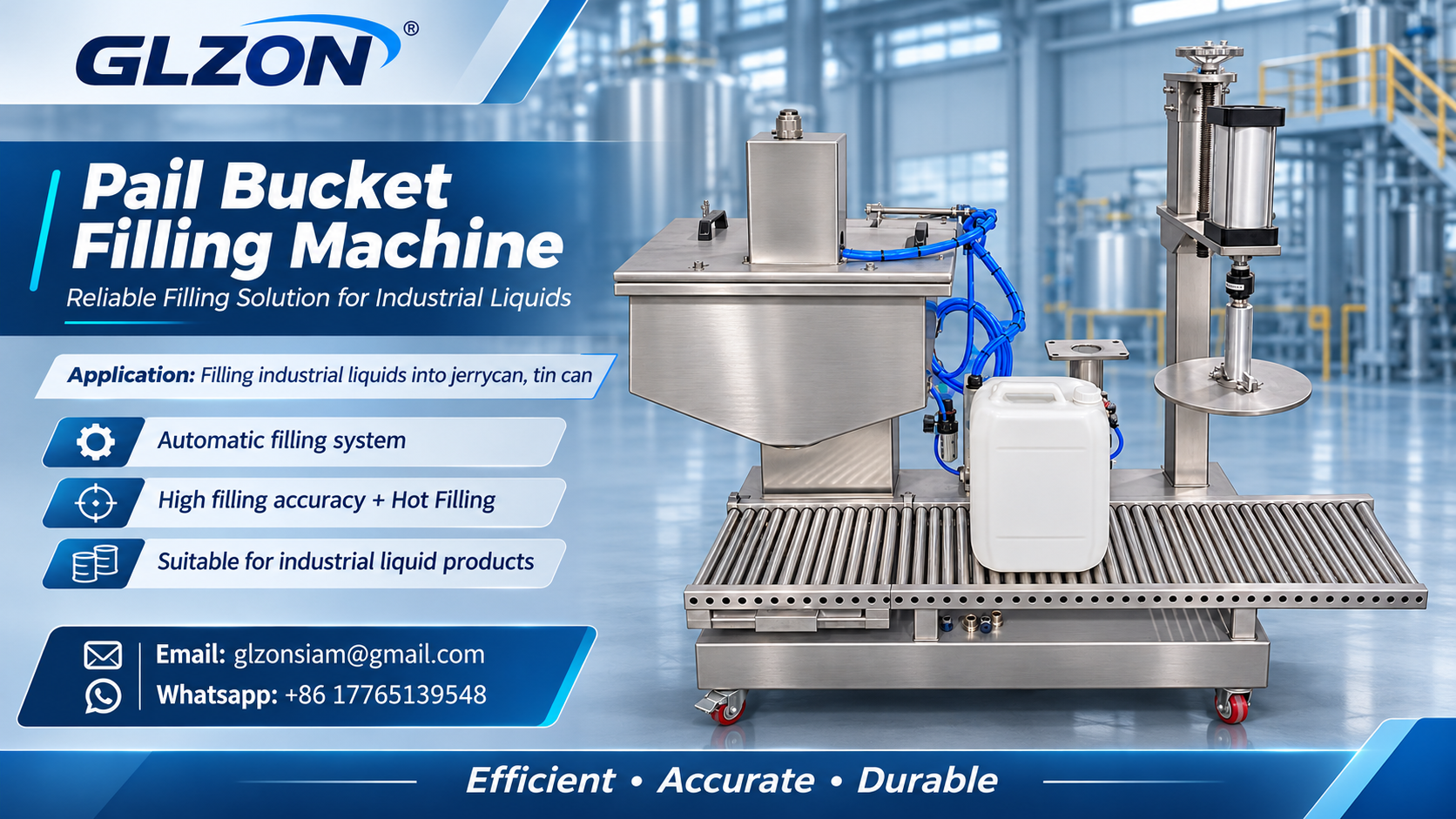
Applications of Pail and Bucket Filling Machines
Pail filling equipment supports different industrial packaging applications.
Paint Filling
A paint filling machine packages compatible water-based and solvent-based paint products into industrial pails.
The machine configuration depends on paint viscosity, container dimensions, filling quantity, and safety requirements.
Coating Filling
Coating manufacturers use suitable filling equipment to package industrial coatings into buckets and pails.
Furthermore, the feeding system must match the product’s flow characteristics.
Adhesive Filling
Industrial adhesive manufacturers use pail filling machines to package compatible liquid adhesives and bonding products.
The machine may require a suitable pump to handle thicker products.
Chemical Liquid Filling
Chemical manufacturers use bucket filling machines for compatible industrial liquids.
These applications may include detergents, cleaning chemicals, disinfectants, and other liquid products.
However, manufacturers must check chemical compatibility before selecting product-contact materials.
Epoxy Resin Filling
Some epoxy resin products can be packaged into industrial buckets and pails.
The manufacturer must consider resin viscosity, chemical compatibility, and the required filling method.
Lubricant and Oil Filling
Industrial oil and lubricant manufacturers use filling machines to package compatible products into larger containers.
Depending on product viscosity, the machine may use a suitable pump-based filling system.
Different Types of Industrial Pail Filling Machines
GLZON provides different liquid filling configurations according to product characteristics and production requirements.
1. Semi-Automatic Pail Filling Machine
A semi-automatic pail filling machine combines manual container positioning with automatic filling control.
The operator places an empty pail under the filling nozzle. Then, the machine dispenses the preset quantity.
This configuration suits manufacturers who need controlled filling without a fully automatic production line.
2. Automatic Bucket Filling Machine
An automatic bucket filling machine can integrate container feeding, positioning, filling, and conveying.
Furthermore, manufacturers can add automatic lid placement and closing equipment.
3. Paint Filling Machine
A paint filling machine handles compatible paint and coating products.
Manufacturers should select the appropriate pump, filling nozzle, and contact materials according to product viscosity and chemical properties.
4. Viscous Liquid Pail Filling Machine
A viscous liquid filling machine handles products with higher resistance to flow.
For example, suitable configurations can package compatible thick paints, adhesives, coatings, and other viscous liquids.
5. Chemical Pail Filling Machine
A chemical pail filling machine packages compatible industrial chemical liquids into buckets and pails.
The final design must consider product compatibility, corrosion resistance, and any special safety requirements.
6. Pail Filling and Closing Line
An integrated pail filling line combines filling and container closing operations.
A typical configuration may include:
- Empty pail feeding system
- Pail positioning unit
- Liquid filling station
- Lid placement equipment
- Bucket closing system
- Finished pail conveyor
- Optional labeling equipment
As a result, manufacturers can coordinate several packaging operations within one production line.
Working Principle of a Pail Filling Machine
The machine follows a controlled filling process.
Step 1: Prepare the Liquid Product
First, the operator prepares the paint, adhesive, or chemical liquid in a compatible storage tank.
The product must meet the machine’s feeding and material compatibility requirements.
Step 2: Position the Empty Pail
Next, the operator or automatic handling system positions an empty pail under the filling nozzle.
The machine checks the container position before filling starts.
Step 3: Start Material Feeding
The pump transfers liquid from the storage tank to the filling nozzle.
The selected pump must match the product viscosity and chemical properties.
Step 4: Control the Filling Quantity
The weighing or volumetric control system measures the quantity of liquid entering the pail.
Once the machine reaches the preset target, it stops the filling operation.
Step 5: Release the Filled Pail
After filling, the machine releases the container.
The operator or conveyor then transfers the pail to the next station.
Step 6: Place and Close the Lid
Finally, the operator or automatic system places the lid onto the filled pail.
A compatible bucket closing machine secures the lid before the finished container moves to inspection and storage.
Filling Methods for Paint and Industrial Liquids
The correct filling method depends on the product and packaging requirements.
Weight-Based Filling
Weight-based filling measures the actual product weight during the filling process.
This method suits manufacturers who specify the net product weight in each pail.
Volumetric Filling
Volumetric filling dispenses a preset liquid volume into the container.
It can suit compatible products where manufacturers specify filling quantities in liters.
Pump-Based Filling
A pump transfers liquid from the storage tank to the filling nozzle.
Manufacturers should select a suitable pump according to viscosity, chemical compatibility, and required flow rate.
Therefore, the filling method should match the actual product and production requirements.
Technical Specifications
The following table presents general configuration options for industrial pail filling equipment.
| Parameter | Configuration |
|---|---|
| Machine Type | Pail Filling Machine |
| Application | Paint, Adhesive and Chemical Liquids |
| Operation | Semi-Automatic or Automatic |
| Container Type | Pails and Buckets |
| Container Capacity | 5 L, 10 L, 20 L, 30 L or Other Sizes |
| Filling Method | Weight-Based or Volumetric |
| Filling System | Suitable Pump-Based System |
| Filling Nozzles | According to Machine Configuration |
| Nozzle Adjustment | According to Container Dimensions |
| Weighing System | Electronic Weighing System |
| Control System | PLC or Other Suitable Control |
| Bucket Closing | Optional |
| Conveyor System | Optional |
| Customization | According to Production Requirements |
Note: These are general configuration options, not guaranteed specifications for every machine. Final parameters depend on the selected model, product viscosity, container dimensions, and production requirements.
Advantages of Industrial Pail Filling Equipment
Industrial pail filling machines offer several benefits for manufacturers.
- Controlled Filling: The system controls the quantity of liquid dispensed into each pail.
- Flexible Container Sizes: Suitable configurations can support different bucket dimensions.
- Multiple Applications: Manufacturers can package compatible paints, coatings, adhesives, and chemicals.
- Improved Efficiency: Automatic filling helps streamline packaging operations.
- Reduced Manual Handling: Conveyors and automatic positioning can reduce operator involvement.
- Flexible Configuration: Manufacturers can select suitable pumps, nozzles, and filling methods.
- Easy Integration: The machine can connect to lid placement and bucket closing equipment.
Furthermore, an integrated pail filling line can improve the overall packaging workflow.
How to Choose the Right Pail Filling Machine
Before purchasing a pail filling machine, manufacturers should consider several important factors.
1. Identify Your Product
First, identify the exact liquid product you need to package.
For example, paint, adhesive, detergent, and solvent products have different physical and chemical properties.
2. Check Product Viscosity
Next, determine whether the product has low, medium, or high viscosity.
This information helps the manufacturer select a suitable pump and filling mechanism.
3. Confirm Pail Sizes
Specify all required container capacities and dimensions.
For example, your production may require 5 L, 10 L, 20 L, and 30 L pails.
4. Check Nozzle Position
Consider the height and opening dimensions of each container.
A suitable nozzle arrangement can help accommodate different pail sizes.
5. Determine Filling Accuracy
Decide whether your production requires weight-based or volumetric filling.
Your target filling quantity and product characteristics will help determine the correct method.
6. Select the Automation Level
Choose between semi-automatic and fully automatic operation.
In addition, consider whether you need automatic pail feeding, lid placement, and bucket closing.
7. Evaluate Safety Requirements
Finally, check product flammability, corrosion, vapor generation, and other hazards.
Some paint and solvent applications require special protective measures and explosion-protected components. The manufacturer must assess the actual product SDS and applicable safety standards.
Frequently Asked Questions (FAQ)
What is a pail filling machine used for?
A pail filling machine packages compatible liquid products into industrial pails and buckets. Common applications include paint, coatings, adhesives, detergents, and chemical liquids.
Can one machine fill different pail sizes?
Yes, a suitably configured machine can accommodate different compatible pail sizes. However, the filling station, nozzle position, and container handling system must match the required dimensions.
Can a bucket filling machine handle paint?
Yes. A suitable bucket filling machine can handle compatible paint products. The pump and filling system must match the paint viscosity and chemical properties.
Can the machine fill 20 L and 30 L buckets?
Yes, suitable machine configurations can fill compatible 20 L and 30 L buckets. The final design depends on container dimensions and the selected model.
Is the filling nozzle adjustable?
Depending on the machine design, the nozzle position can be adjusted to accommodate different container heights and filling requirements.
Can the machine include an automatic bucket closing system?
Yes. Manufacturers can integrate compatible lid placement and bucket closing equipment into the production line.
Which filling method is suitable for paint?
Weight-based and volumetric filling can both suit paint packaging. The correct method depends on product density, viscosity, target filling quantity, and required accuracy.
Does a paint filling machine require explosion-proof components?
Some solvent-based paints produce flammable vapors and may require suitable explosion-protected equipment. Manufacturers should assess the product SDS, operating environment, and applicable safety standards before confirming the machine configuration.
Conclusion
A pail filling machine helps manufacturers package paint, coatings, adhesives, and compatible chemical liquids into industrial buckets and pails.
With suitable weighing, pumping, and filling systems, manufacturers can improve filling consistency and streamline packaging operations.
GLZON provides industrial liquid filling solutions for different product viscosities, container sizes, and production requirements. Whether you need a semi-automatic pail filling machine, automatic bucket filling machine, paint filling machine, or complete pail filling and closing line, GLZON can help you explore a suitable configuration.
Contact GLZON today. Share your product type, viscosity, pail dimensions, target filling quantity, and production capacity to discuss your industrial filling solution.