


















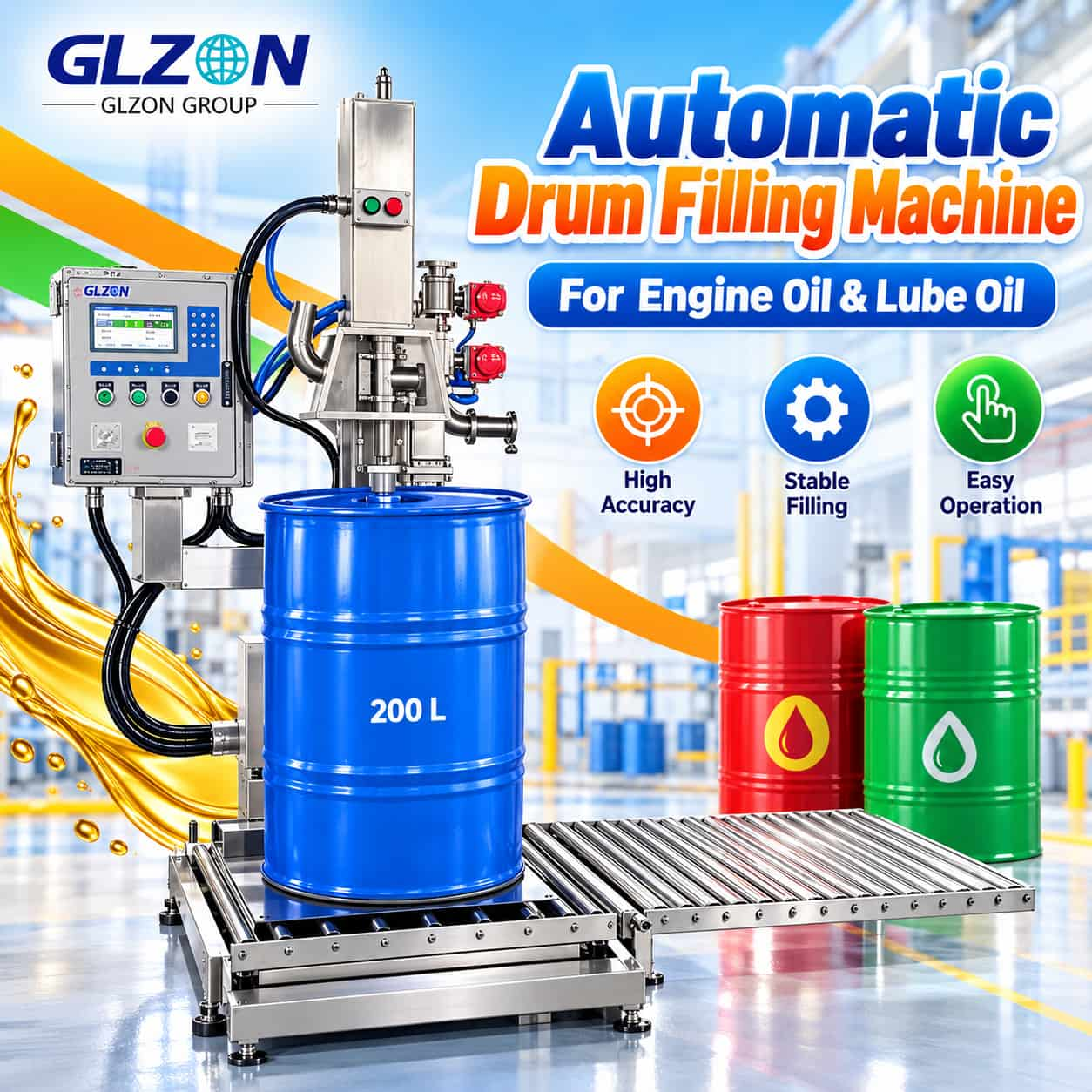
A drum filling machine helps manufacturers fill industrial liquids into drums accurately and efficiently. It is widely used in industries that handle engine oil, lubricants, chemicals, detergents, paints, and other liquid products.
Choosing the right drum filling equipment depends on several factors, including the type of liquid, drum capacity, required filling speed, and level of automation. Some businesses need a simple semi-automatic machine, while others require a fully automatic drum filling system for continuous production.
In this article, we explain how drum filling machines work, the available types, their industrial applications, and what to consider before choosing a system for your production line.
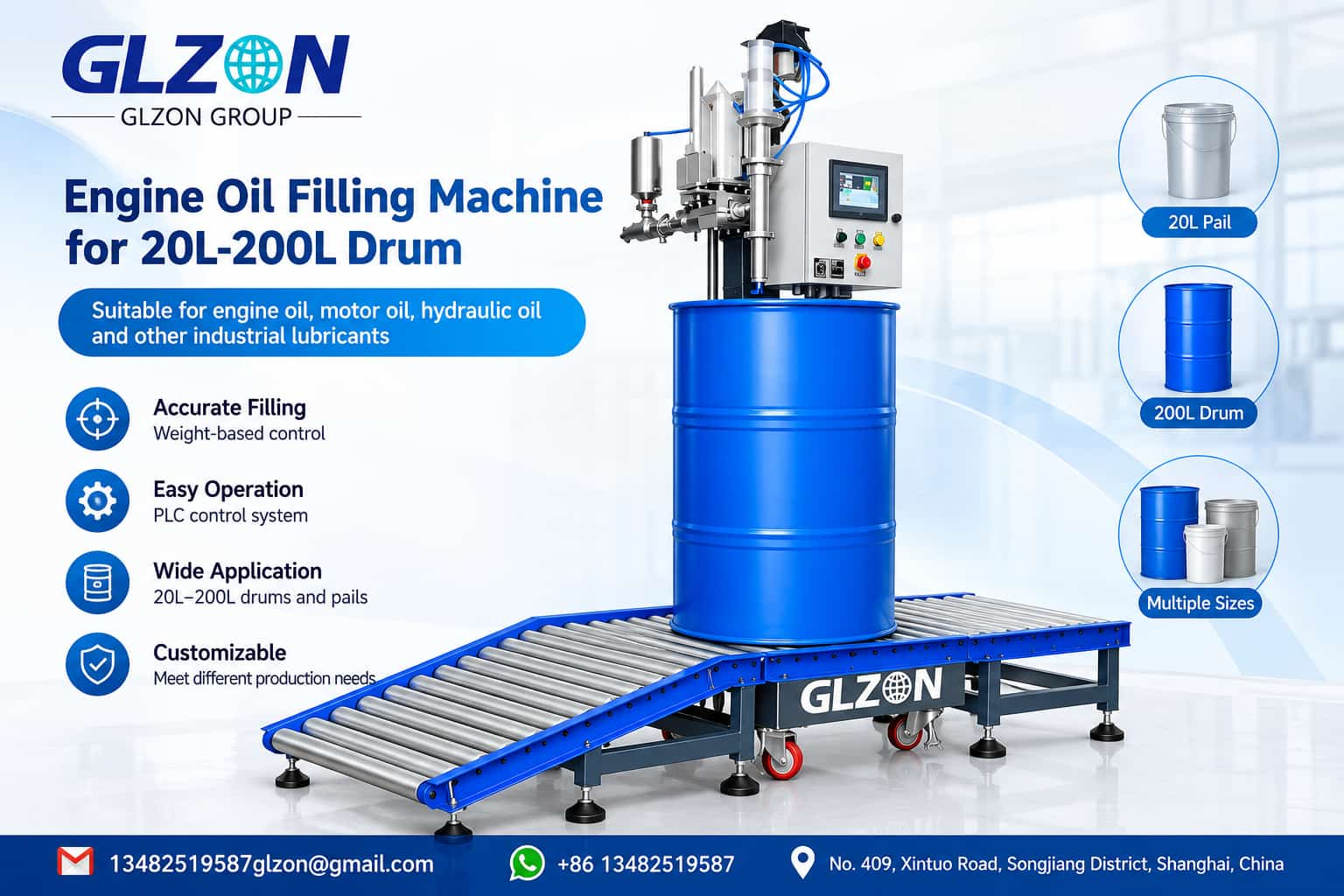
What Is a Drum Filling Machine?
A drum filling machine is industrial equipment designed to dispense a measured quantity of liquid into a drum or barrel. Depending on the machine configuration, it can fill containers using a weighing system, a flow meter, or another suitable dosing method.
These machines are commonly used to package products in 20-liter, 50-liter, 200-liter, and other drum sizes, depending on the customer’s requirements and the equipment design.
Compared with manual filling, a suitable drum filling system can improve filling consistency, reduce product spills, and make daily production easier to manage.
Manufacturers can choose between manual, semi-automatic, and automatic systems according to their production volume and operating requirements.
Types of Drum Filling Machines
Different products require different filling methods. The best option depends on the liquid’s properties, production targets, and the level of automation required.
Semi-Automatic Drum Filling Machine
A semi-automatic drum filling machine is suitable for businesses that need controlled filling without fully automating the entire process.
An operator usually positions the drum and starts the filling cycle. The machine then controls the dispensing process according to its configuration.
This option may suit small and medium-sized production facilities, especially when production volumes do not justify a fully automatic line.
Automatic Drum Filling Machine
An automatic drum filling machine reduces the need for manual intervention during the filling process. Depending on the system, automatic functions may include container positioning, filling, weight monitoring, filling cutoff, and conveyor handling.
It is a practical option for manufacturers with higher production requirements or those looking to integrate drum filling into a larger packaging line.
The actual level of automation varies by model, so buyers should confirm which functions are included in the proposed system.
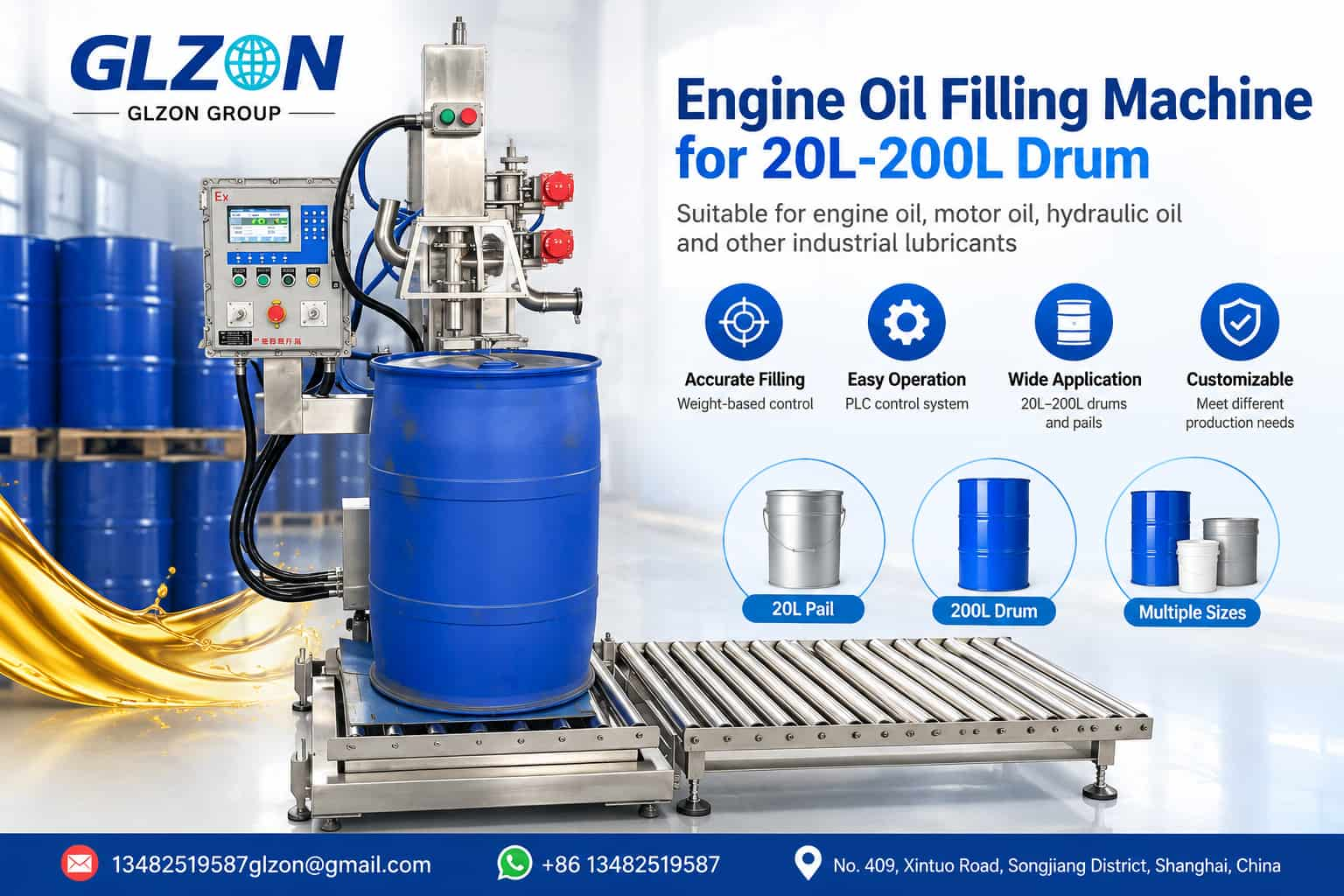
Net-Weight Drum Filling System
A net-weight drum filling system uses a weighing system to measure the quantity of product dispensed into the container.
This approach can be suitable for industrial liquids where filling by weight is preferred. The required accuracy depends on the product, target fill weight, machine design, and operating conditions.
Before selecting a system, manufacturers should discuss the required filling accuracy and test the equipment with their actual product when possible.
Flow-Meter Drum Filling System
A flow-meter filling system measures the volume or mass of liquid passing through the filling line, depending on the selected meter and system design.
It may be suitable for compatible liquids such as oils and other industrial products. However, the correct flow meter must be selected according to the liquid’s viscosity, flow characteristics, and other process requirements.
Applications of Drum Filling Equipment
Drum filling equipment is used across several industries. The machine configuration should match the liquid being filled and the conditions in which the equipment will operate.
Engine Oil and Motor Oil Filling
Engine oil manufacturers and distributors often need to fill lubricants into industrial drums for storage, transportation, and bulk distribution.
An engine oil filling machine can be configured for different container sizes and production requirements. The filling method should account for the oil’s viscosity and the required filling accuracy.
Lubricant Oil Filling
Industrial lubricants may vary in viscosity and handling requirements. A lubricant oil filling machine should therefore be selected according to the product’s characteristics and the desired production rate.
Depending on the application, manufacturers may choose a semi-automatic system for flexible production or an automatic drum filling system for higher throughput.
Chemical Liquid Filling
Chemical filling machines are used for compatible liquid products in chemical manufacturing and processing facilities.
When selecting equipment for chemical filling, it is important to consider product compatibility, corrosion resistance, seal materials, and the required safety measures. Some liquids may require specialized pumps, filling nozzles, ventilation, or other protective features.
The machine supplier should review the product’s safety information before confirming a suitable configuration.
Detergent, Paint, and Coating Filling
Some detergents, paints, and coatings can also be packaged using drum filling equipment.
However, these products may have different viscosities, foaming behavior, or cleaning requirements. The filling method and wetted materials should be selected to suit the actual formulation.
Key Features to Consider in a Drum Filling Machine
Not every machine offers the same features. Before making a purchase, compare the following points.
Filling accuracy: Confirm the required target weight or volume and ask how accuracy is measured under actual operating conditions.
Filling method: Determine whether net-weight, flow-meter, or another filling method is suitable for your liquid.
Drum size: Confirm the container dimensions, opening size, capacity, and positioning requirements.
Product compatibility: Check the materials used for pumps, pipes, seals, valves, and other product-contact components.
Filling speed: Discuss the required production rate and the expected time for positioning, filling, and removing each container.
Nozzle design: The nozzle should suit the liquid’s flow behavior and help control dripping, splashing, or foaming where applicable.
Automation and controls: Depending on the production line, useful functions may include PLC controls, a touchscreen interface, automatic filling cutoff, and conveyor integration.
Safety requirements: For hazardous or flammable products, confirm the necessary electrical classification, ventilation, grounding, and other safeguards with a qualified supplier.
Reviewing these details early can help prevent costly changes after installation.
How to Choose the Right Drum Filling Machine
Selecting a drum filling machine starts with understanding your product and production process.
1. Identify the Liquid Material
Tell the supplier whether you need to fill engine oil, lubricant oil, detergent, paint, or a chemical liquid. Provide information about viscosity, temperature, foaming behavior, and material compatibility where relevant.
2. Confirm the Drum Capacity
Specify the drum capacity and dimensions. If you use more than one container size, explain the full range so the supplier can determine whether adjustments or additional equipment are required.
3. Set Your Production Target
Estimate how many drums you need to fill per hour or per shift. The required output will help determine whether a semi-automatic machine or a fully automatic filling system is more appropriate.
4. Define the Required Accuracy
Explain whether the target fill quantity is measured by weight or volume and specify the acceptable tolerance.
The supplier should confirm the expected performance based on the liquid, container, and operating conditions.
5. Consider Future Expansion
If production is expected to increase, consider whether the machine can integrate with conveyors, capping equipment, labeling systems, or other packaging equipment.
A well-planned system can make future production changes easier.
6. Request a Detailed Quotation
Ask the supplier to provide the machine configuration, filling method, applicable container sizes, production capacity, material specifications, installation requirements, and warranty terms.
If possible, request a filling test using your actual product before finalizing the equipment.
Drum Filling Machine vs. IBC Filling Machine
A drum filling machine and an IBC filling machine serve similar purposes, but they are designed around different container formats and production requirements.
Drum filling machines are commonly used for industrial drums and barrels. IBC filling machines are designed for intermediate bulk containers, which generally hold a larger quantity of liquid.
The choice depends on the packaging format, filling capacity, available floor space, and production workflow.
Some manufacturers may require separate drum and IBC filling stations, while others may benefit from a system designed to accommodate multiple container formats.
Before choosing a combined system, confirm that the filling equipment can handle the dimensions, weights, filling method, and handling requirements of each container type.
Benefits of Using an Automatic Drum Filling System
An automatic drum filling system can offer several operational benefits when properly matched to the production process.
- Consistent filling: Automated controls can help maintain repeatable filling results.
- Improved productivity: Reducing manual steps can help increase output.
- Less product waste: Suitable nozzle and cutoff designs can help control spills and dripping.
- Reduced manual handling: Conveyors and automated positioning can reduce repetitive operator tasks.
- Process integration: The filling system may be connected to other packaging equipment.
- Better process control: Electronic controls and weighing or metering systems can make filling operations easier to monitor.
Actual results depend on the machine design, liquid characteristics, production environment, and operator practices.
Frequently Asked Questions
What is a drum filling machine used for?
A drum filling machine is used to dispense a measured quantity of liquid into industrial drums or barrels. Common applications include engine oil, lubricants, detergents, paints, coatings, and compatible chemical products.
What is the difference between an automatic and a semi-automatic drum filling machine?
A semi-automatic machine requires an operator to perform some steps, such as positioning containers or starting a cycle. An automatic machine can perform more of these steps through integrated controls and handling equipment. The exact functions depend on the model.
Can a drum filling machine fill engine oil?
Yes. A suitably configured drum filling machine can fill engine oil and other compatible lubricants. The pump, filling method, nozzle, seals, and controls should be selected according to the product’s viscosity and required filling performance.
Can one machine fill both drums and IBC totes?
Some systems can be designed to handle multiple container formats, but this depends on the machine configuration. Container dimensions, filling range, handling equipment, and weighing capacity must be checked before confirming compatibility.
How do I choose the correct filling capacity?
Start with the container size and the required production output. Then consider the liquid’s flow properties, target filling accuracy, and time needed for container handling. Ask the supplier to recommend a configuration based on these requirements.
What affects the price of a drum filling machine?
The price depends on the automation level, filling method, production capacity, product-contact materials, control system, safety requirements, and optional equipment. A detailed quotation should clearly identify the included components and any additional costs.
Find the Right Drum Filling Machine for Your Production
Choosing the right drum filling machine can help improve filling consistency, production efficiency, and product handling. The best solution depends on your liquid material, drum size, required output, filling accuracy, and automation needs.
If you are planning to purchase drum filling equipment for engine oil, lubricants, or compatible chemical products, prepare these details before requesting a quotation:
- Liquid material and viscosity
- Drum capacity and dimensions
- Required filling speed
- Target filling accuracy
- Preferred automation level
- Installation location and applicable safety requirements
Share these details with your equipment supplier to receive a recommendation that matches your production needs.