


















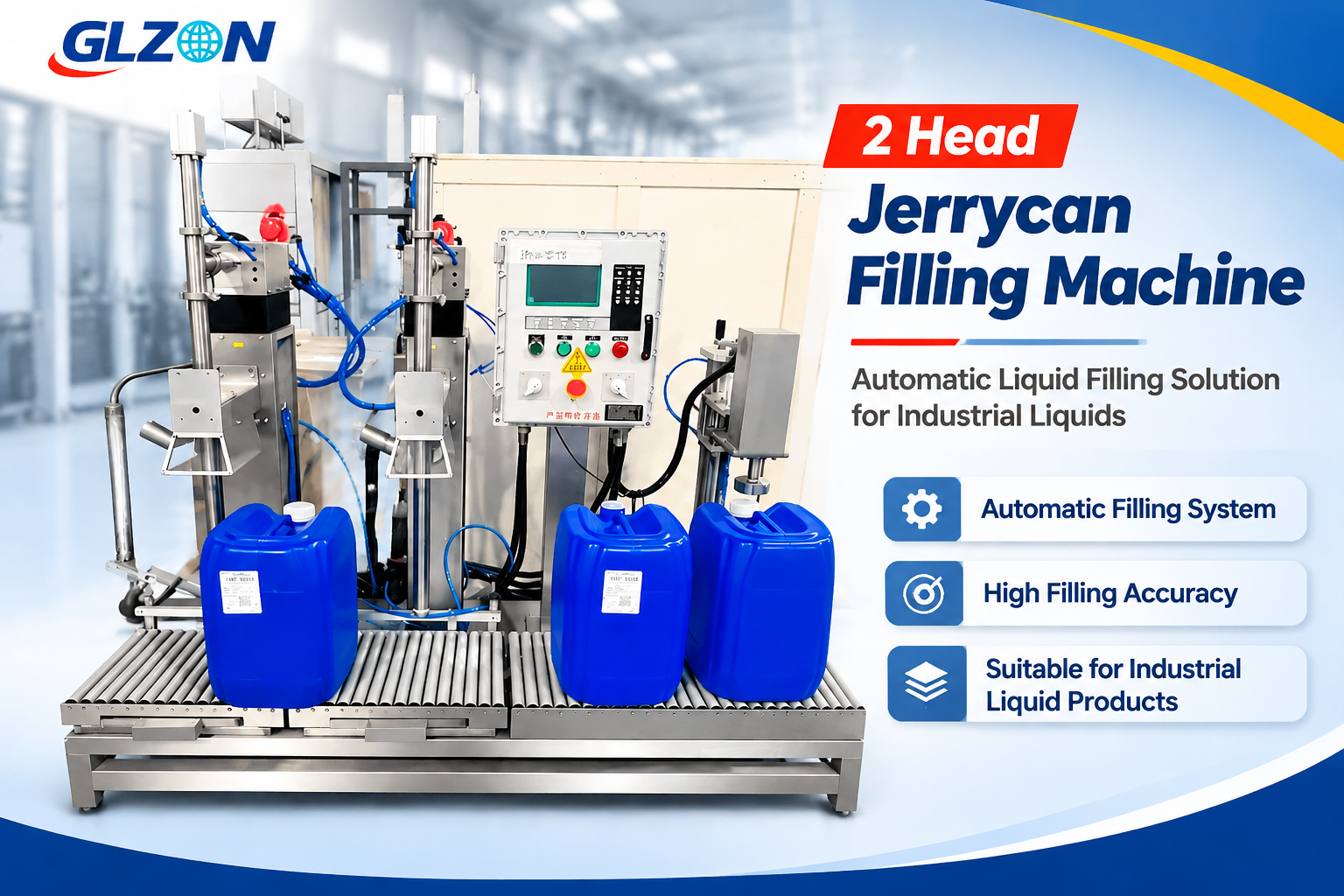
Chemical Liquid Filling Machine for Industrial Chemicals and Jerry Can Packaging
Introduction
A chemical liquid filling machine helps manufacturers package industrial chemicals into bottles, cans, and jerry cans. It controls the filling quantity and supports consistent packaging operations.
GLZON provides industrial liquid filling solutions for different chemical products and container sizes. These machines can handle compatible products such as detergents, disinfectants, solvents, thinner, and other industrial liquids.
Furthermore, manufacturers can choose semi-automatic or fully automatic filling systems. They can also connect capping machines and conveyors to create a complete chemical packaging line.
What Is a Chemical Liquid Filling Machine?
A chemical liquid filling machine is industrial equipment designed to dispense controlled quantities of chemical liquids into containers.
Different chemicals have different physical and chemical properties. For example, some products flow easily, while others have higher viscosity. Some solvents also require special safety precautions.
Therefore, manufacturers must select a filling system that matches their actual product characteristics.
Depending on production requirements, the machine can support manual container positioning, automatic filling, or a fully integrated packaging process.
Main Features of Chemical Liquid Filling Machines
1. Accurate Filling Control
The filling system controls the quantity of liquid delivered into each container. Manufacturers can select weight-based or volumetric filling according to their packaging requirements.
As a result, the machine helps maintain consistent filling operations.
2. Multiple Chemical Applications
A suitable machine configuration can handle different compatible industrial liquids.
For example, manufacturers can package detergents, disinfectants, solvents, and other chemical products.
However, each product requires a compatibility assessment before machine selection.
3. Flexible Container Sizes
The machine can be configured for different container dimensions and filling quantities.
Common applications include 5 L, 10 L, 20 L, 25 L, and 30 L containers, depending on the selected model.
4. Semi-Automatic and Automatic Operation
Manufacturers can choose between different automation levels.
A semi-automatic chemical filling machine requires an operator to position the container. The machine then controls the filling process.
In contrast, an automatic liquid filling machine can include container feeding, positioning, filling, and conveying.
5. Chemical-Resistant Contact Materials
Chemical compatibility plays an important role in machine design.
Therefore, manufacturers should select suitable stainless steel grades, seals, hoses, pumps, and other product-contact components according to the chemical properties.
6. Optional Capping System
After filling, containers can move to a capping station.
A compatible automatic capping machine closes each container. Furthermore, manufacturers can integrate conveyors and other packaging equipment to improve production flow.
Applications of Chemical Filling Machines
Chemical liquid filling equipment supports several industrial applications.
Solvent Filling
Solvent filling machines package compatible industrial solvents into bottles, cans, and jerry cans.
However, some solvents produce flammable vapors. Therefore, manufacturers must assess explosion protection, ventilation, and electrical safety requirements before selecting equipment.
Thinner Filling
Thinner filling machines package compatible thinner products used in paint, coatings, and industrial cleaning applications.
The machine must match the product’s chemical properties and required safety conditions.
Acid Filling
Acid filling machines handle compatible acidic liquids.
Manufacturers must carefully select product-contact materials, seals, and pumps. In addition, they should check the acid concentration and temperature before confirming the machine configuration.
Pesticide Filling
Pesticide filling machines support the packaging of compatible agricultural chemical liquids.
These applications may require suitable chemical-resistant components and controlled filling operations.
Bleach Filling
Bleach filling equipment packages compatible bleaching products into bottles and industrial containers.
Manufacturers should select appropriate materials to handle the product’s chemical characteristics.
Laundry Detergent Filling
Laundry detergent filling machines package liquid detergents into bottles and larger containers.
Depending on product viscosity, manufacturers can choose suitable pumps and filling mechanisms.
Disinfectant Filling
Disinfectant filling machines support the packaging of compatible cleaning and sanitation products.
They can operate as standalone machines or as part of a complete liquid packaging line.
Different Types of Chemical Liquid Filling Machines
GLZON provides different filling configurations according to product characteristics and production requirements.
1. Semi-Automatic Chemical Filling Machine
A semi-automatic chemical filling machine combines manual container handling with automatic filling control.
The operator positions the empty container and starts the filling process. The machine then controls the dispensing quantity.
This configuration suits manufacturers who need controlled filling without a fully automated production line.
2. Automatic Chemical Filling Machine
An automatic chemical filling machine can integrate container feeding, positioning, filling, and conveying.
Furthermore, manufacturers can add automatic capping and labeling systems.
3. Solvent Filling Machine
A solvent filling machine packages compatible solvent products into suitable containers.
Manufacturers must evaluate flammability, vapor generation, and chemical compatibility before finalizing the design.
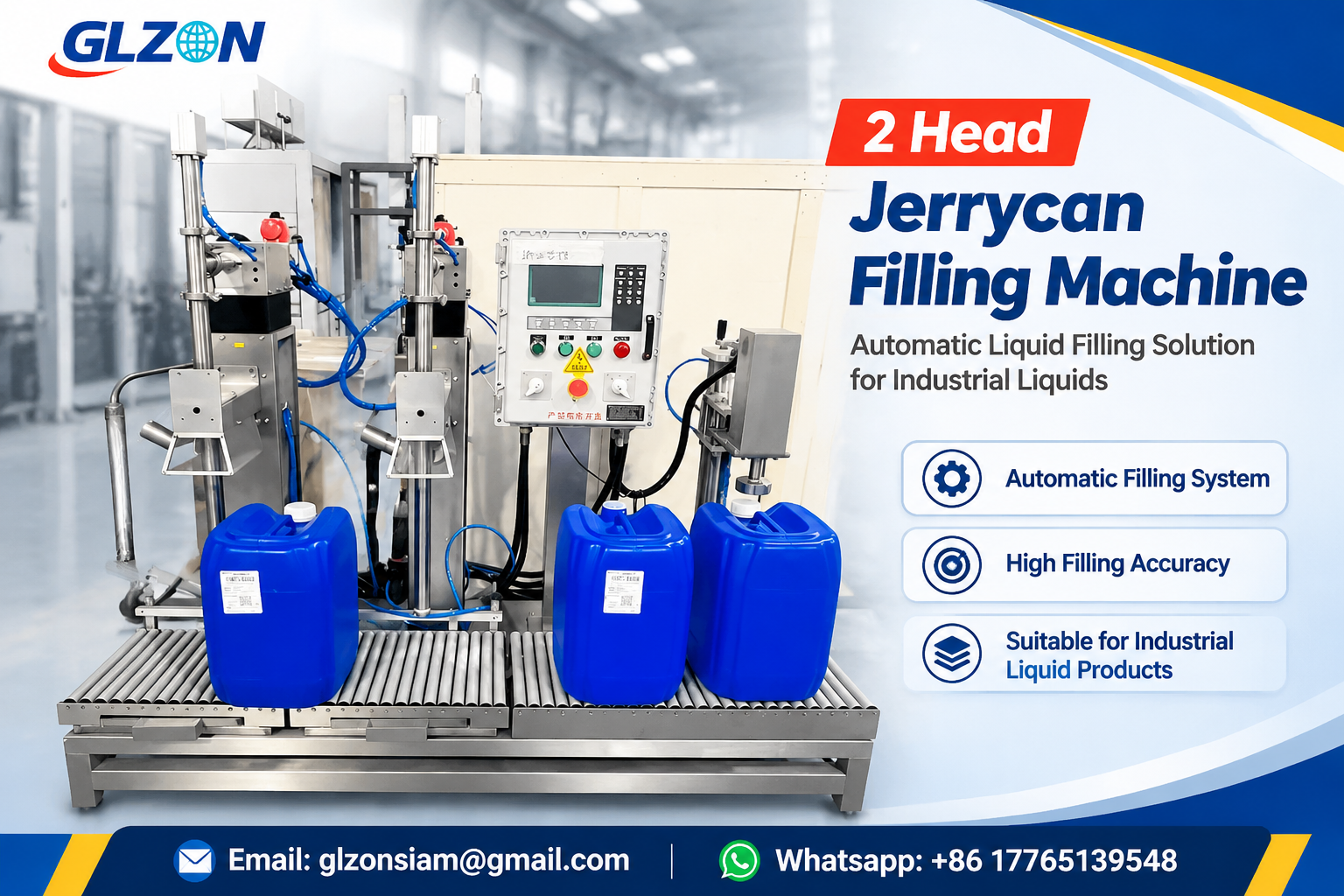
4. Jerry Can Filling Machine
A jerry can filling machine packages compatible liquids into larger containers.
It can support different container capacities, including 5 L, 10 L, 20 L, and 25 L, depending on the machine configuration.
5. Viscous Chemical Filling Machine
A viscous liquid filling machine handles chemical products with higher resistance to flow.
For example, manufacturers may use suitable pump-based filling systems for thicker detergents, adhesives, and other compatible products.
6. Chemical Filling and Capping Line
An integrated chemical packaging line combines filling and container closing operations.
A typical system may include:
- Empty container feeding
- Posicionamiento automático de contenedores
- Liquid filling station
- Automatic capping machine
- Finished container conveyor
- Optional labeling equipment
As a result, manufacturers can coordinate several packaging operations in one production line.
Working Principle of a Chemical Liquid Filling Machine
The machine follows a controlled filling process.
Step 1: Prepare the Chemical Product
First, the operator prepares the chemical liquid in a compatible storage tank.
The product must meet the machine’s material compatibility and operating requirements.
Step 2: Position the Empty Container
Next, the operator or automatic conveyor positions an empty container under the filling nozzle.
Step 3: Start Liquid Feeding
The pump transfers liquid from the storage tank to the filling nozzle.
The selected pump must match the product’s viscosity and chemical properties.
Step 4: Control the Filling Quantity
The control system measures the filling quantity using the selected weighing or volumetric method.
Once the machine reaches the target quantity, it stops the filling operation.
Step 5: Transfer the Filled Container
After filling, the operator or conveyor moves the container to the next station.
Step 6: Close the Container
Finally, a suitable capping machine closes the container.
The finished product can then move to inspection, labeling, and storage.
Filling Methods for Chemical Liquids
The correct filling method depends on the product and packaging requirements.
Weight-Based Filling
Weight-based filling measures the actual product weight during filling.
This method suits manufacturers who specify packaging quantities by net weight.
Volumetric Filling
Volumetric filling dispenses a preset liquid volume into each container.
It suits compatible products where manufacturers specify quantities in liters or milliliters.
Pump-Based Filling
A pump transfers liquid from the storage tank to the filling nozzle.
The manufacturer should select a suitable pump according to viscosity, chemical compatibility, and required flow rate.
Therefore, the filling method should match the actual product rather than relying on one standard configuration for every chemical.
Technical Specifications
The following table presents general configuration options for industrial chemical liquid filling equipment.
| Parámetro | Configuration |
|---|---|
| Machine Type | Chemical Liquid Filling Machine |
| Application | Compatible Industrial Chemicals |
| Operation | Semi-Automatic or Automatic |
| Filling Method | Weight-Based or Volumetric |
| Container Type | Bottles, Cans and Jerry Cans |
| Container Capacity | According to Selected Model |
| Feeding System | Compatible Pump-Based System |
| Filling Control | Electronic Control System |
| Filling Nozzles | According to Production Requirements |
| Contact Materials | According to Chemical Compatibility |
| Capping System | Optional |
| Conveyor System | Optional |
| PLC Control | Optional According to Configuration |
| Customization | According to Product Requirements |
Note: Final specifications depend on the chemical properties, viscosity, container dimensions, target filling quantity, and production capacity.
Advantages of Industrial Chemical Filling Equipment
Chemical filling machines provide several advantages for industrial manufacturers.
- Controlled Filling: The machine controls the quantity dispensed into each container.
- Improved Efficiency: Automated filling helps streamline packaging operations.
- Flexible Applications: Suitable configurations can handle different compatible chemical liquids.
- Reduced Manual Handling: Conveyors and automatic container positioning reduce operator involvement.
- Multiple Container Options: The equipment can support compatible bottles, cans, and jerry cans.
- Easy Integration: Manufacturers can connect filling, capping, and labeling equipment.
- Customizable Configuration: The machine design can match specific production and safety requirements.
Furthermore, a suitable packaging system can help manufacturers improve production consistency.
How to Choose the Right Chemical Filling Machine
Before purchasing a chemical filling machine, manufacturers should consider the following factors.
1. Identify the Chemical Product
First, identify the exact chemical name and obtain its Safety Data Sheet (SDS).
This information helps determine the suitable machine materials and safety requirements.
2. Check Product Viscosity
Next, determine whether the liquid has low, medium, or high viscosity.
The product viscosity affects pump selection, filling speed, and nozzle design.
3. Evaluate Chemical Compatibility
Check the compatibility of stainless steel, seals, hoses, pumps, and other contact components.
In addition, consider corrosion resistance and product temperature.
4. Confirm Container Dimensions
Provide the container height, width, length, and opening dimensions.
This information helps the manufacturer design a suitable filling station.
5. Determine Filling Capacity
Specify the target filling quantity for each container.
For example, your production may require 5 L, 20 L, or 25 L packages.
6. Define Production Capacity
Calculate how many containers you need to fill per hour.
Then, select a machine that matches your production target.
7. Consider Safety Requirements
Finally, evaluate product flammability, vapor generation, corrosion, and other hazards.
Some applications require explosion-protected equipment and additional safety measures. The final design must follow the applicable safety standards.
Frequently Asked Questions (FAQ)
What products can a chemical liquid filling machine handle?
A suitable machine can handle compatible industrial liquids, including detergents, disinfectants, solvents, thinner, pesticides, and other chemicals.
Can a chemical filling machine fill 20 L and 25 L jerry cans?
Yes. Suitable machine configurations can fill compatible 20 L and 25 L jerry cans. However, the design depends on container dimensions and production requirements.
What is the difference between a semi-automatic and automatic chemical filling machine?
A semi-automatic machine requires an operator to position containers. An automatic machine can integrate container feeding, positioning, filling, and conveying.
Does a solvent filling machine need explosion-proof components?
Some solvents produce flammable vapors and require suitable explosion-protected equipment. Manufacturers must assess the product SDS, vapor characteristics, and applicable safety standards before confirming the design.
Which filling method is suitable for chemical liquids?
Weight-based and volumetric filling can both suit chemical packaging applications. The correct method depends on product density, viscosity, filling requirements, and accuracy targets.
Can one machine fill different chemical products?
Potentially, but manufacturers must verify chemical compatibility before changing products. Different chemicals may require different seals, hoses, pumps, and cleaning procedures.
Can the filling machine include automatic capping?
Yes. Manufacturers can integrate compatible automatic capping equipment with the filling system. They can also add conveyors and labeling equipment.
Conclusion
A chemical liquid filling machine helps manufacturers package industrial liquids into bottles, cans, and jerry cans. It provides controlled filling operations and supports different packaging requirements.
GLZON offers industrial liquid filling solutions for compatible chemical products and different container sizes. Whether you need a semi-automatic chemical filler, solvent filling machine, or automatic jerry can filling line, GLZON can help you explore a suitable configuration.
Contact GLZON today. Share your chemical product name, SDS, viscosity, container size, filling quantity, and required production capacity to discuss your industrial filling solution.