

















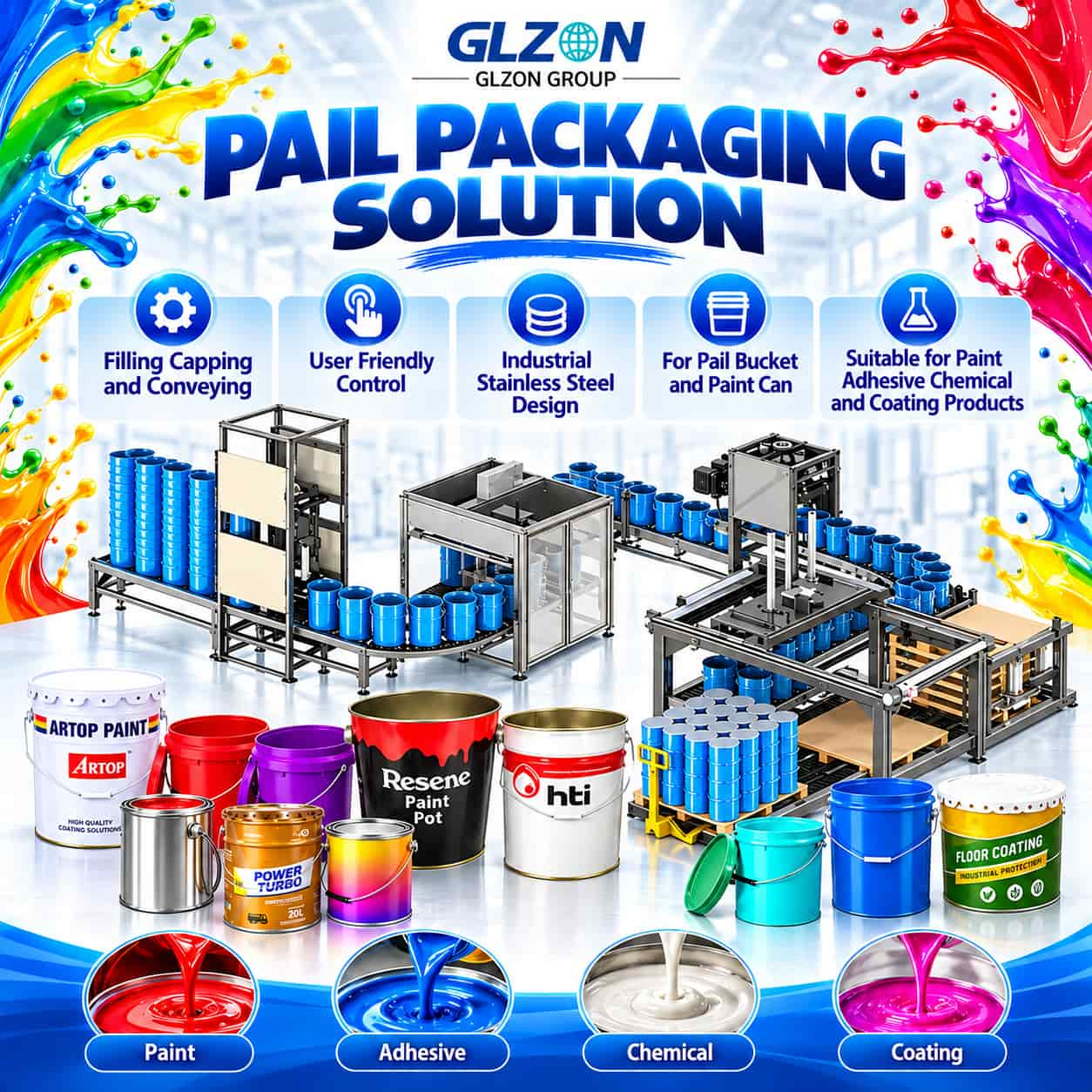
A Coating Filling Machine helps paint manufacturers fill cans, buckets, pails, and drums with measured quantities of liquid coatings. The right machine can improve filling consistency, reduce product waste, and support a smoother packaging process. However, manufacturers must match the equipment to their coating type, container size, and production targets.
Modern paint filling equipment offers different filling methods, control options, and levels of automation. For example, a small coating factory may prefer a semi-automatic filling station, while a high-volume manufacturer may need an automatic paint packaging line.
In addition, coating products have different flow properties. Water-based paint, primers, industrial finishes, and thick protective coatings may require different pumps, filling nozzles, and measurement systems.
Therefore, choosing the correct machine begins with understanding the product and the packaging process.
What Is a Coating Filling Machine?
A Coating Filling Machine is industrial packaging equipment that transfers a controlled quantity of paint or another compatible coating into a container. Manufacturers use it to fill products for construction, decoration, automotive applications, and industrial surface protection.
In simple terms, the machine performs three main functions: it transfers the liquid, measures the quantity, and stops the filling process at the required target.
However, not every machine uses the same technology.
Some machines measure the product by weight. Others measure volume. In addition, certain models support manual container handling, while automated systems can integrate with conveyors and other packaging equipment.
A typical paint filling system may include:
- A liquid transfer pump or supply connection
- Product-contact hoses and pipes
- A filling nozzle and flow-control valve
- A weighing or volumetric measurement system
- An electronic control panel
- A container support platform
- Optional conveyors and handling equipment
The exact equipment design depends on the material and application.
As a result, manufacturers should evaluate more than the machine’s appearance or advertised capacity.
Why Is the Right Paint Filling Machine Important?
Paint packaging plays an important role in product quality, production efficiency, and customer satisfaction.
For example, inconsistent filling quantities can create packaging problems and increase product loss. Likewise, unsuitable filling equipment may produce unnecessary splashing or slow production.
Therefore, manufacturers need equipment that matches their operating conditions.
More Consistent Packaging Quantities
A suitable paint filling machine measures the product during each filling cycle.
As a result, operators can maintain better control over the amount of paint entering every container.
However, actual accuracy depends on the machine design, product properties, and operating conditions.
Lower Product Waste
Excess filling increases the amount of product used per container. Meanwhile, dripping and splashing create additional waste.
Therefore, manufacturers should choose suitable filling nozzles and control settings.
Improved Production Workflow
A filling machine can reduce repetitive manual work. In addition, equipment with container handling features can simplify movement between packaging stations.
Consequently, operators can focus more attention on production monitoring and quality checks.
Greater Packaging Flexibility
Coating manufacturers often offer several package sizes.
For example, the same product may be available in small retail cans and larger contractor buckets.
Therefore, equipment with suitable adjustment options can help companies manage different packaging orders.
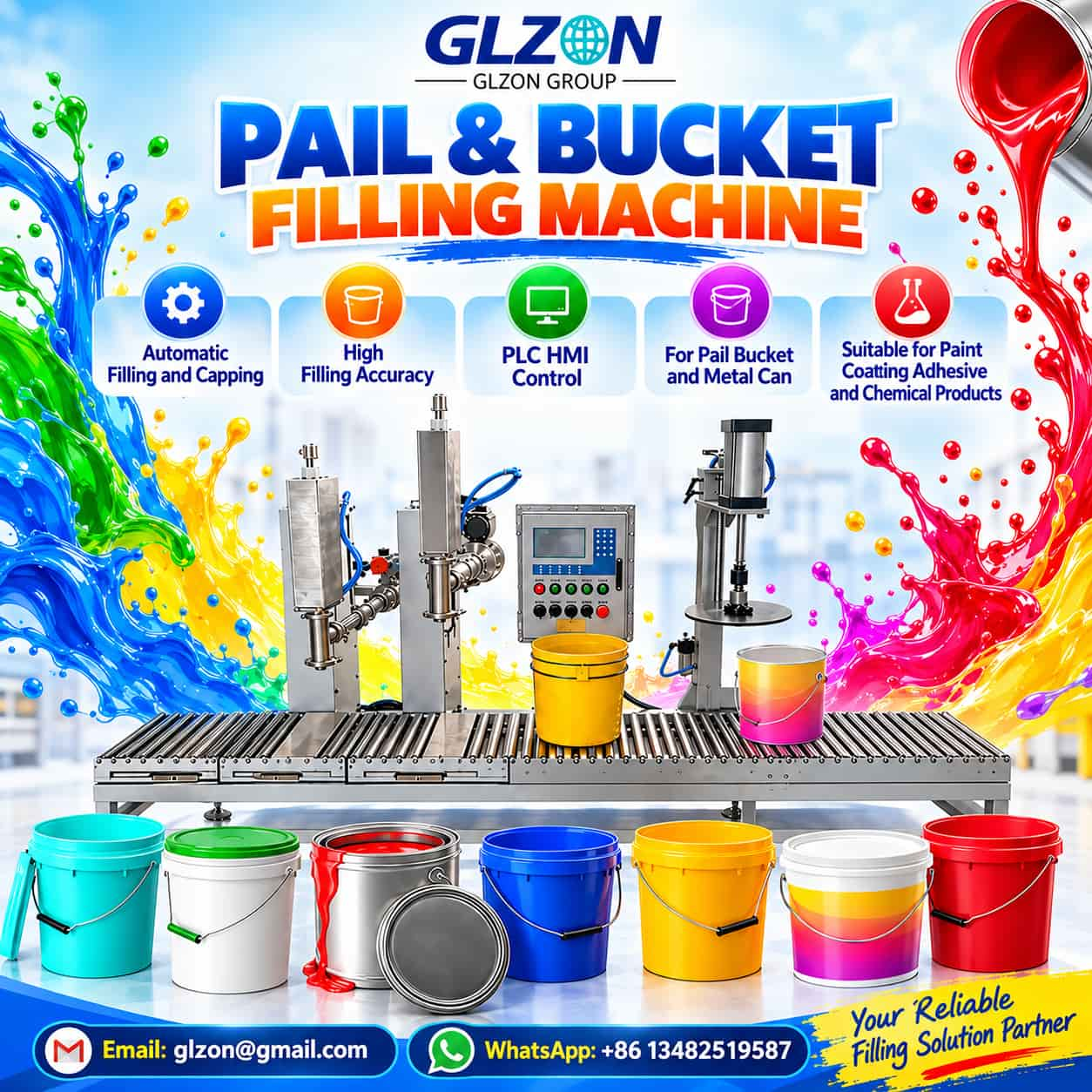
How Does a Paint Filling Machine Work?
The filling process depends on the machine’s measurement technology and automation level. Nevertheless, many systems follow a similar operating sequence.
1. Container Preparation
First, the operator or handling system moves an empty container into the filling area.
The machine must support the container securely. In addition, the filling nozzle must align with the container opening.
2. Filling Quantity Selection
Next, the operator enters the required filling quantity.
For weight-based filling, the control system uses a target mass. In contrast, volumetric filling uses a target volume.
Therefore, the measurement method must match the packaging requirements.
3. Product Transfer
Once the cycle starts, the transfer system delivers the coating through the filling nozzle.
The pump or supply system must suit the product’s flow behavior.
For example, thicker coatings may require a different transfer arrangement from thin liquids.
4. Filling Measurement
During operation, the machine monitors the product quantity.
Some systems use an initial fast-fill stage followed by a slower finishing stage.
As a result, the machine can limit filling overshoot when operators choose suitable settings.
5. Container Removal
Finally, the filling system stops the product flow when it reaches the target.
The operator or conveyor then moves the container away.
Afterward, the container can proceed to lid placement, closing, labeling, or another packaging operation.
Which Filling Method Is Best for Paint and Coatings?
Manufacturers commonly compare weight-based and volumetric filling equipment.
Both methods can work well in suitable applications. However, their measurement principles differ.
Weight-Based Paint Filling
Weight-based filling measures product mass with a weighing system.
For example, a manufacturer that sells paint according to net weight may choose this method.
In addition, direct weight measurement can be useful when liquid density changes with temperature.
However, platform design, vibration, and other operating factors can influence measurement performance.
Volumetric Paint Filling
Volumetric filling measures the volume of product delivered into a container.
Depending on the equipment, this method may use a flow meter, piston, or another suitable measurement technology.
It can support many coating applications. Nevertheless, manufacturers must consider the product’s density, viscosity, and measurement requirements.
Weight-Based vs. Volumetric Filling
| Comparison | Weight-Based Filling | Volumetric Filling |
|---|---|---|
| Measures | Product mass | Liquid volume |
| Common principle | Electronic weighing | Flow or displacement measurement |
| Main advantage | Direct net-weight measurement | Direct volume measurement |
| Main consideration | Weighing stability | Fluid properties and calibration |
| Typical use | Products sold by weight | Products sold by volume |
| Best choice | Depends on product and packaging rules | Depends on product and packaging rules |
Key takeaway: Neither method suits every application. Therefore, manufacturers should select the filling technology according to how they specify and sell the finished product.
Types of Paint Filling Equipment
Different production environments require different levels of automation.
As a result, equipment buyers should compare standalone filling machines with integrated packaging systems.
Semi Automatic Paint Filling Machine
A semi automatic paint filling machine usually requires an operator to position the container and start the filling cycle.
The machine then controls the filling process according to its settings.
For example, a weight-based model may automatically stop the flow when the measured product reaches the target.
This approach often suits facilities that handle several products or relatively small production batches.
In addition, semi-automatic equipment can provide operational flexibility when container sizes change frequently.
Automatic Paint Filling Machine
Один automatic paint filling machine may combine filling control with container detection, movement, and other handling functions.
For instance, a packaging line may use conveyors to move containers through the filling and closing stations.
As a result, manufacturers can reduce some repetitive manual tasks.
However, greater automation may increase equipment complexity, installation requirements, and project cost.
Therefore, manufacturers should select automation according to their actual production needs.
Paint Can Filling Machine
A paint can filling machine focuses on packaging coatings in smaller or medium-sized cans.
The system must suit the container opening, target fill quantity, and product characteristics.
In addition, manufacturers may need separate equipment for lid placement and closing.
Paint Drum Filling Equipment
Drum filling systems handle larger industrial packages.
For example, a coating manufacturer may use drums when supplying bulk materials to commercial customers.
Consequently, the machine must account for container handling, filling quantity, and product transfer requirements.
What Container Sizes Can Paint Filling Machines Handle?
Paint manufacturers use a wide variety of containers. However, a single machine may not support every size without adjustments or additional equipment.
| Container size | Typical application | Selection factor |
|---|---|---|
| 1L | Retail paint and specialty coatings | Small filling quantity |
| 4L–5L | Decorative paints and primers | Can positioning |
| 10L | Commercial coating products | Filling speed and stability |
| 18L–20L | Contractor paint buckets | Bucket opening and height |
| 25L–30L | Industrial coating products | Container handling |
| 200L | Bulk industrial coatings | Drum support and transfer capacity |
These capacities illustrate common packaging options; they do not represent the verified range of one specific machine.
For example, a system designed for small paint cans may not have the appropriate platform or filling nozzle for 200L drums.
Therefore, buyers should provide exact container dimensions, including height, diameter, and opening size.
What Paint and Coating Products Can Filling Equipment Handle?
Different coating formulations require different handling conditions.
Therefore, buyers should always confirm material compatibility before selecting a filling machine.
Water-Based Paint
Water-based paint is common in decorative and architectural applications.
However, its viscosity and composition vary between products.
For this reason, manufacturers should evaluate the liquid transfer system and suitable product-contact materials.
Primers and Undercoats
Primers prepare surfaces for further coating.
Some formulations contain pigments and other ingredients that affect flow.
Therefore, filling equipment must suit the product’s viscosity and handling characteristics.
Industrial Protective Coatings
Industrial coatings may protect metal structures, machinery, or other surfaces.
However, these products can have different chemical properties and operating requirements.
As a result, the equipment supplier should review the product information before recommending a configuration.
High-Viscosity Coatings
Thick coatings may require specialized product transfer components.
For example, the pump and nozzle design can affect the time needed to complete each filling cycle.
Consequently, viscosity is an important factor in equipment selection.
Solvent-Based Coatings
Solvent-based coatings may present fire, vapor, and chemical exposure hazards.
Therefore, manufacturers must assess the installation and applicable safety requirements before selecting machinery.
A standard filling machine does not automatically meet the requirements for handling flammable solvents.
For U.S. facilities, the OSHA flammable liquids standard provides important information about applicable safety requirements.
Key Features to Consider Before Buying
The best paint filling equipment balances measurement performance, product compatibility, and ease of operation.
Before purchasing, buyers should review the following features.
Точность наполнения
The machine must meet the production line’s measurement requirements.
Therefore, request the manufacturer’s stated tolerance and ask how the equipment performs under actual operating conditions.
Product-Compatible Components
The pump, valves, hoses, and filling nozzle come into contact with the coating.
Consequently, buyers should confirm that these components suit the formulation.
Filling Speed
High production speed may be important, but it should not come at the expense of consistent filling.
For example, a thick coating may require a longer filling cycle than a lower-viscosity product.
Therefore, compare machines using realistic product-specific operating conditions.
Cleaning Accessibility
Manufacturers often produce different coating colors.
As a result, cleaning and product changeovers can affect available production time.
Suitable equipment should allow operators to access relevant components according to the manufacturer’s maintenance instructions.
Control System
A clear control panel helps operators select filling settings and monitor production.
In addition, useful controls can help reduce mistakes during setup and changeover.
Safety Requirements
The correct safety design depends on the coating formulation and factory environment.
For example, flammable products may require specialized equipment and facility controls.
Therefore, suppliers and buyers should review the relevant safety data sheets and applicable regulations.
Paint Filling Machine vs. Paint Packaging Machine
A paint filling machine primarily measures and transfers the product into a container.
A paint packaging machine, on the other hand, may handle several stages of the packaging process.
For example, a complete paint packing machine system may include filling, container closing, labeling, and product handling.
Typical Paint Packaging Process
- Prepare empty paint containers.
- Position each container at the filling station.
- Fill the required quantity.
- Check the filling result.
- Place and secure the lid.
- Apply the product label.
- Move the finished container to the collection area.
However, not every factory needs a fully integrated packaging line.
A smaller manufacturer may prefer separate machines. In contrast, a large production facility may benefit from equipment integration.
Therefore, manufacturers should evaluate how each machine fits the overall packaging process.
Common Paint Filling Problems and Possible Causes
Even suitable equipment requires correct setup and maintenance.
Therefore, operators should understand the common factors that affect filling performance.
| Problem | Possible cause | Recommended action |
|---|---|---|
| Inconsistent filling quantity | Incorrect settings or measurement issues | Check the settings and measurement system |
| Slow filling | Product viscosity or transfer limitations | Review pump and nozzle suitability |
| Paint dripping | Nozzle or valve performance | Inspect the relevant components |
| Excessive splashing | Flow rate or nozzle position | Review the filling configuration |
| Frequent changeover delays | Difficult product access or cleaning | Evaluate cleaning and maintenance procedures |
| Container positioning problems | Mismatched support or dimensions | Check the container handling arrangement |
These are general diagnostic considerations. Operators should follow the equipment manufacturer’s procedures when investigating specific faults.
How to Select the Right Coating Filling Machine
Choosing a Coating Filling Machine becomes easier when buyers organize their requirements before contacting suppliers.
Step 1: Review Your Product
First, identify the coating type and its physical characteristics.
In addition, provide available viscosity data and relevant safety information.
Step 2: Define Your Packaging Requirements
Next, list the container capacities, dimensions, and required filling quantities.
For example, a manufacturer may need to handle 5L and 20L buckets.
Therefore, the supplier can evaluate whether a single configuration suits both formats.
Step 3: Determine Production Capacity
Estimate the number of containers you need to fill per hour or shift.
However, remember that filling speed depends on the product and machine configuration.
Step 4: Select the Automation Level
Compare the labor requirements, available factory space, and expected production volume.
For example, a semi-automatic system may suit a flexible production environment.
In contrast, a larger operation may need automatic container handling.
Step 5: Compare Technical Proposals
Review the filling method, materials, measurement tolerance, controls, and available accessories.
Furthermore, ask suppliers to identify any optional features or excluded equipment.
Step 6: Confirm Installation Requirements
Finally, review the available electrical supply, factory layout, product connections, and operating environment.
As a result, you can compare complete equipment solutions rather than focusing only on the purchase price.
What Affects Paint Filling Machine Prices?
The cost of a paint filling machine depends on the equipment configuration and production requirements.
For example, a standalone semi-automatic machine may have a lower initial cost than an integrated automatic packaging line.
However, the total project cost may also include conveyors, specialized pumps, control systems, and installation services.
Important pricing factors include:
- Filling capacity and quantity range
- Measurement technology
- Required filling tolerance
- Coating viscosity
- Product-contact materials
- Pump and nozzle design
- Automation level
- Container handling requirements
- Safety-related engineering
- Customization and additional accessories
Therefore, buyers should request a quotation based on their specific application.
Practical Example: Choosing Equipment for a Paint Factory
Consider a paint manufacturer that produces water-based wall paint and fills 5L and 20L buckets.
The company wants to improve filling consistency while keeping production flexible.
First, the production team reviews the paint’s viscosity and packaging requirements.
Next, they confirm the container dimensions and target output.
They also evaluate how often the production line switches between different paint colors.
A semi-automatic weight-based filling system may be worth evaluating if the company handles moderate production volumes.
However, if production increases significantly, the business may benefit from an automatic system with additional container handling equipment.
This example illustrates a common selection process rather than results from a specific machine test.
The main lesson: Choose the filling equipment according to the product and production process, not simply the number of automated functions.
Часто задаваемые вопросы
What is a coating filling machine?
A coating filling machine measures and transfers paint or other compatible liquid coatings into containers. Manufacturers use it to control filling quantities during industrial packaging.
Can a paint filling machine handle different paint viscosities?
Some filling machines support several viscosity ranges. However, the pump, nozzle, valves, and control settings must suit each coating formulation.
Is an automatic paint filling machine better than a semi-automatic machine?
Not always. An automatic machine may suit higher-volume production, while a semi-automatic machine may offer flexibility for smaller batches. Therefore, the best choice depends on production needs.
How do I choose paint filling equipment for 20L buckets?
First, confirm the coating viscosity and bucket dimensions. Next, determine the required filling tolerance